B2B lead generation looks nothing like it did two years ago. The manual grind of finding prospects, researching them, and writing each message by hand is being handed to AI.
The result is a faster pipeline, sharper targeting, and a lot less work for sales teams. The catch is that more software on its own doesn’t win more deals. How you use it does.
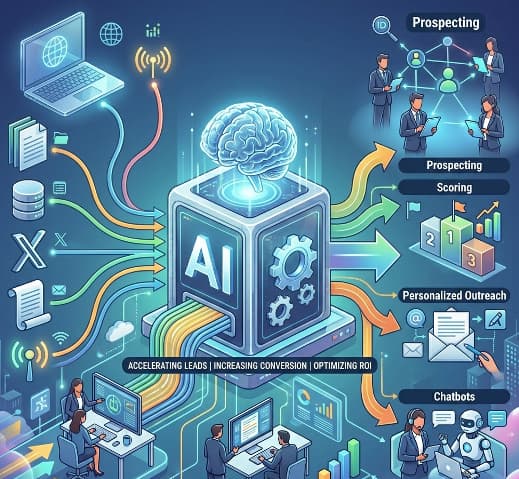
Apollo points to where this is going
A good example is Apollo’s new AI Assistant. It drafts hyper-personalised emails, qualifies CRM accounts, and builds sales sequences without the rep hopping between tabs.
Work that used to take half a day now takes minutes. The software handles the heavy lifting and people focus on the conversations that matter.
That shift matters because the bottleneck has moved. For years, the hard part was volume: finding enough of the right people and getting a message in front of them.
AI has more or less solved that. Lists that took a week to build now take an afternoon, and personalisation that used to be a luxury is now the default. When everyone has the same capability, sending more stops being an advantage.
Where the real edge is now
Tools like this solve the finding and messaging problem. But on LinkedIn, getting a reply takes more than a well-written message, and single-channel outreach is delivering weaker returns as inboxes fill up. A perfectly worded cold message from a stranger still reads as a cold message from a stranger.
The accounts that convert are the ones that show up first. They engage with a prospect’s posts, leave a thoughtful comment, and build a little familiarity before any pitch lands.
By the time the message arrives, the name is already recognised. That small amount of warmth changes the response rate more than any subject line tweak.
It also takes more than one channel. A prospect might ignore a LinkedIn note but reply to an email a week later, or vice versa. Reaching the same person across two or three touchpoints, spaced out and consistent, is what turns a cold name into a conversation.
Done by hand across hundreds of prospects, that is a full-time job. Done badly, it just feels like spam from two directions instead of one.
This is where specialists come in. A LinkedIn Outreach Agency like B2B Buzz handles the orchestration end to end: warming up accounts properly, running multiple touchpoints across LinkedIn and email, and pairing the right AI tooling with a strategy that actually gets answers. Their clients get a steady flow of qualified conversations without managing the stack or the daily activity themselves.
How to think about your own stack
If you are putting this together yourself, the order matters. Get the data and enrichment right first, because no amount of clever messaging fixes a bad list.
Layer AI personalisation on top of that, not the other way round. Then build the warming and follow-up rhythm around it, since that is where most of the results actually come from. Tools are easy to buy. The sequence you run them in is what separates a campaign that books meetings from one that quietly burns through a prospect list.
None of it holds together without solid plumbing underneath either, which is why APIs should be your first priority before you bolt more software on top.
What comes next
AI will keep taking over the manual side of outbound. The companies that win will be the ones that pair that automation with genuine relationship-building, not the ones that simply send more.
The tools are getting smarter. The teams that use them with a real strategy behind them are the ones filling their pipeline.
Comments are closed, but trackbacks and pingbacks are open.